Redesigning the embedded analytics buyer journey from acquisition to activation
One connected story from first touch to activation, built to lift demo and trial requests.
- RoleSenior UX Designer, Growth
- ClientGoodData
- IndustryAnalytics · B2B SaaS
- Year2025
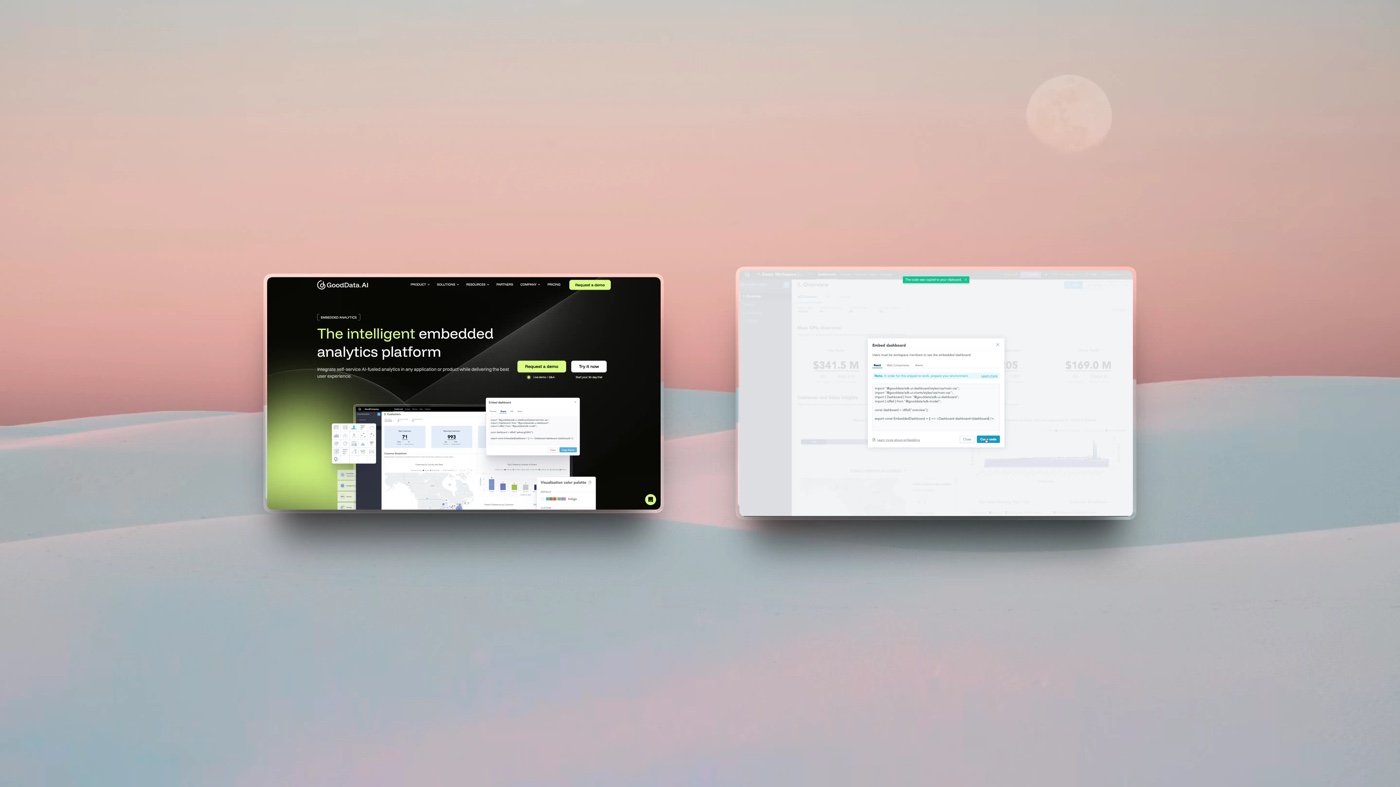
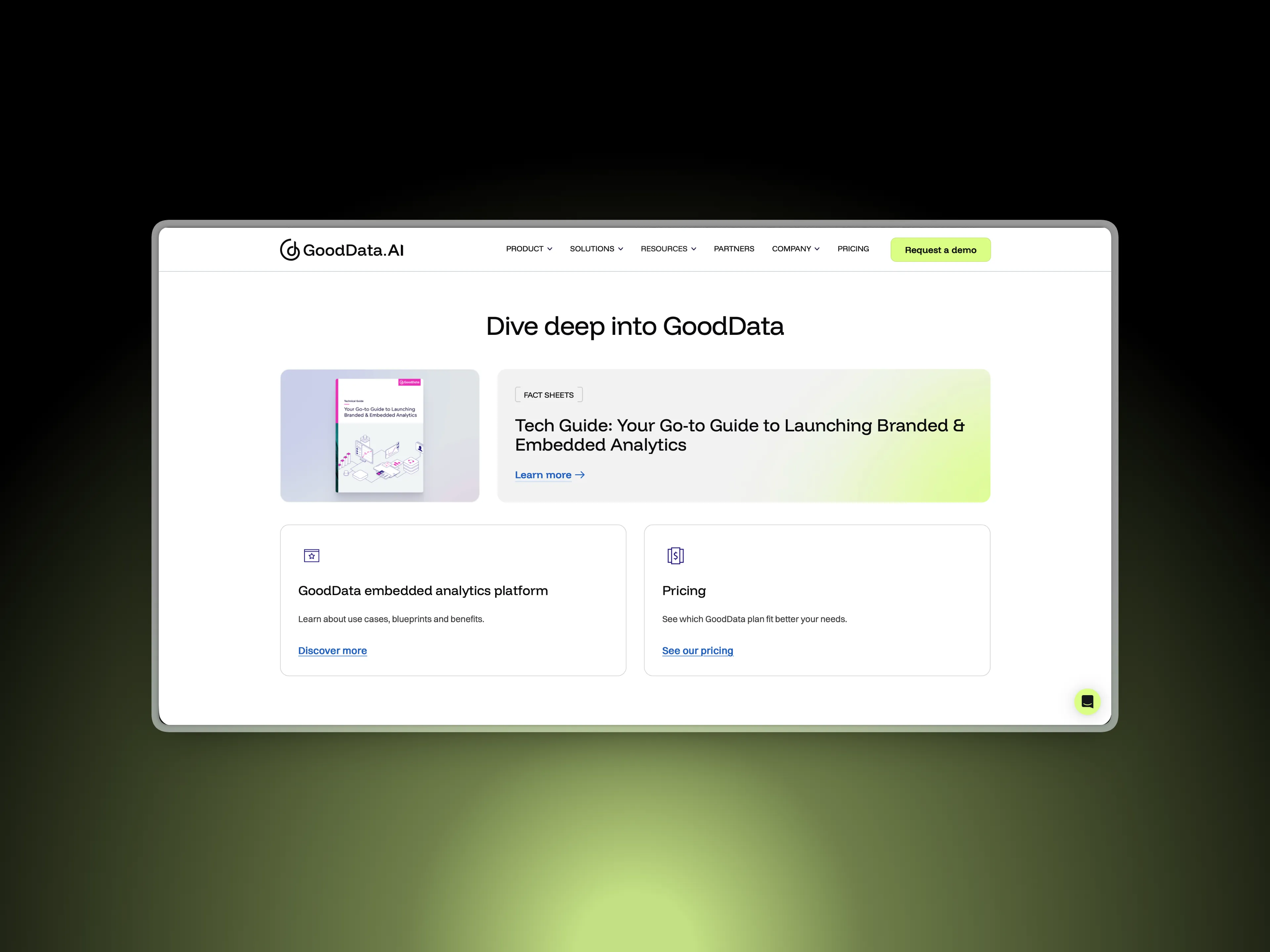
I owned the UX for GoodData's embedded-analytics go-to-market as one connected journey, from paid and organic acquisition through landing page, lifecycle email, and an in-product tour. Mixed-methods research pinpointed where the funnel leaked; a series of design and experiment decisions then lifted demo and trial requests.
Overview
Embedded analytics is sold mostly to product and engineering leaders, and it's bought, or abandoned, based on one question: how hard will this be to embed?
Rather than redesign a page, I treated the whole GTM as a single experience: one narrative carried across the ad, the landing page, the email, and the activation asset, so the prospect never lost the thread.
Full funnel
Acquisition to activation, one journey
Mixed-methods
Funnel-cohort analysis plus interviews
↑ Requests
Demo and trial requests lifted (figures under NDA)
The problem
Embedded analytics has a specific buying friction: prospects can't tell how hard it'll be to embed into their own product. They read, hesitate, and leave before requesting a demo or trial.
A landing page alone doesn't fix it. When the ad, page, email, and tour each tell a slightly different story, the funnel leaks between touchpoints and the prospect loses the thread.
The goal wasn't to redesign the page. It was to lift requests by making one low-friction story carry from first touch to activation.
What I owned
I owned the funnel and flow, the research, the experimentation, and the conversion and performance work, aligned with acquisition.
Funnel & flow
The connective tissue, message, visual story, and CTA, across every surface.
Research
Mixed-methods: funnel-cohort analysis across channels, plus qualitative interviews.
Experimentation
An A/B test of an interactive product tour against an explainer video.
Conversion & performance
A landing-page performance fix and a search / AEO keyword realignment.
One connected funnel, not separate assets
The ad, landing page, email, and tour were owned and built as separate things, so they risked telling different stories, and prospects dropped in the gaps between them.
I treated the GTM as a single experience orchestrated around one narrative, and designed the connective tissue, message, visual story, and CTA, to carry across every surface. A funnel only converts when the story holds from first touch to activation.
Trade-off
Tighter coordination across teams and channels: you can't change one asset in isolation without checking the others.
Find the leak before fixing it
"Increase requests" is a goal, not a diagnosis. We didn't know where intent was being lost, so I ran quantitative funnel-cohort analysis to see where each cohort dropped, paired with interviews to understand why.
Then I prioritized fixes against the real drop-off points the data surfaced, not assumed ones, so the later bets actually paid off.
Trade-off
Slower than shipping on intuition, accepted, because guessing at the wrong friction wastes the redesign. (Research findings are under NDA.)
Answer the real friction: how hard is it to embed?
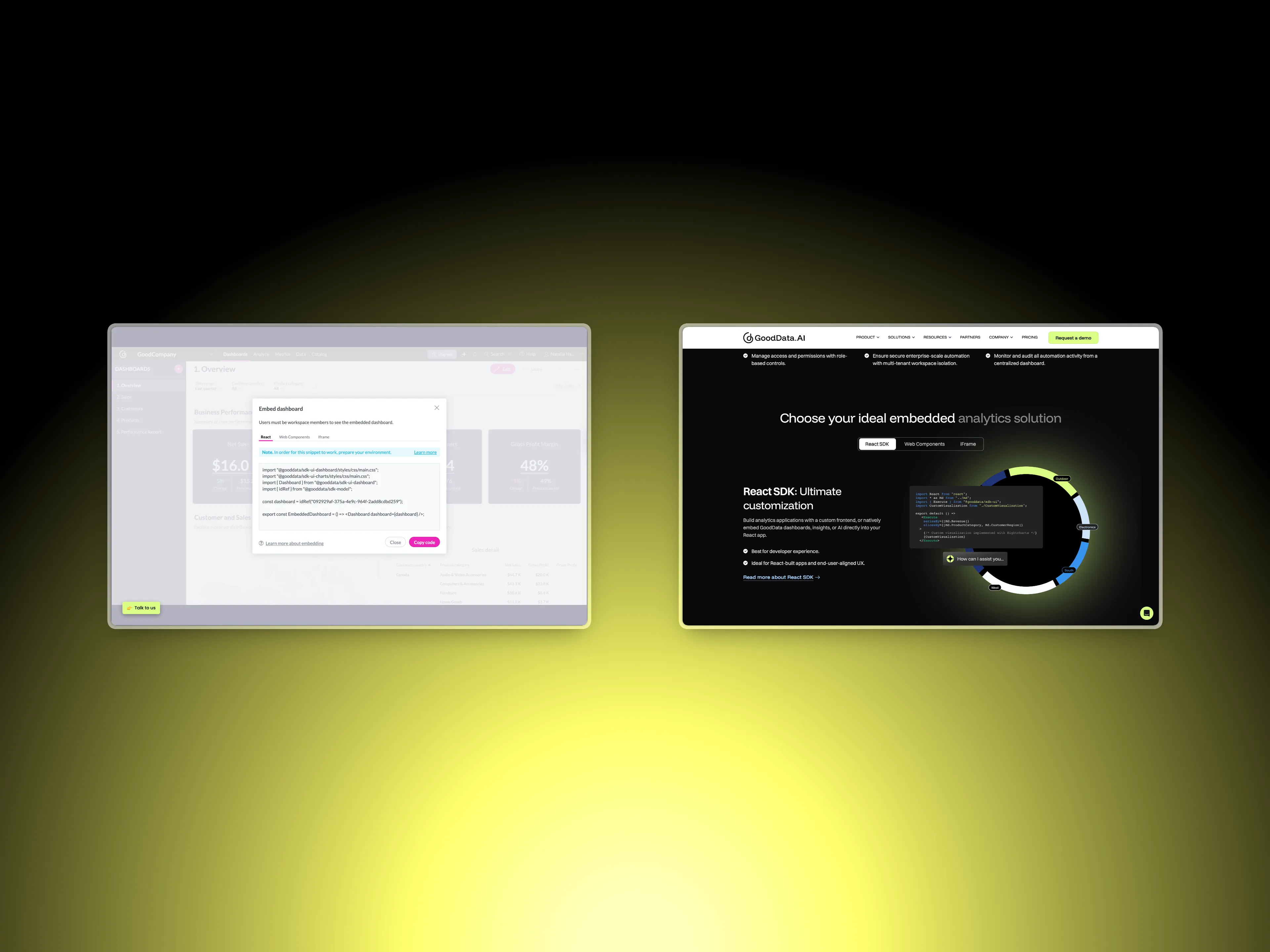
The real blocker needed a consistent answer, not one buried on a single page. So the "low-effort embedding" message ran across ad copy, the landing page, the email, and the activation asset, each surface reinforcing the same reassurance.
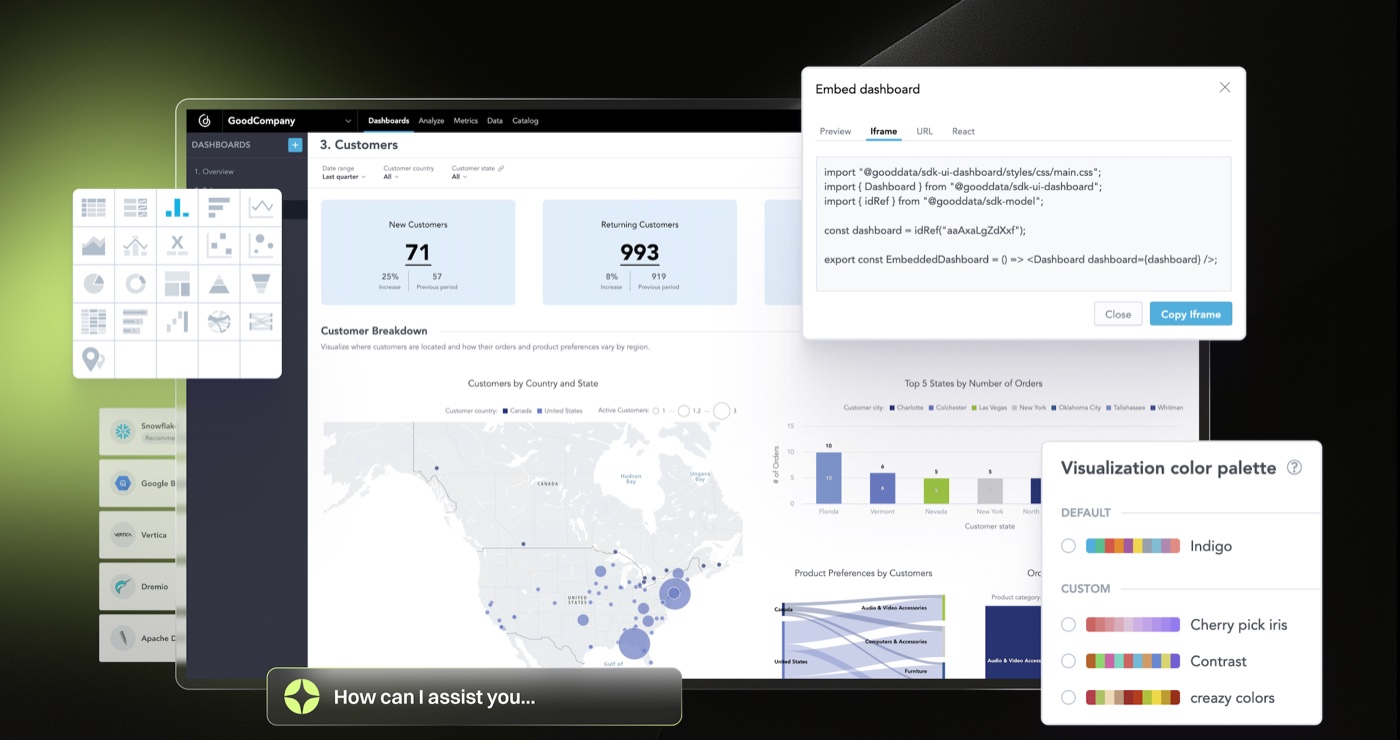
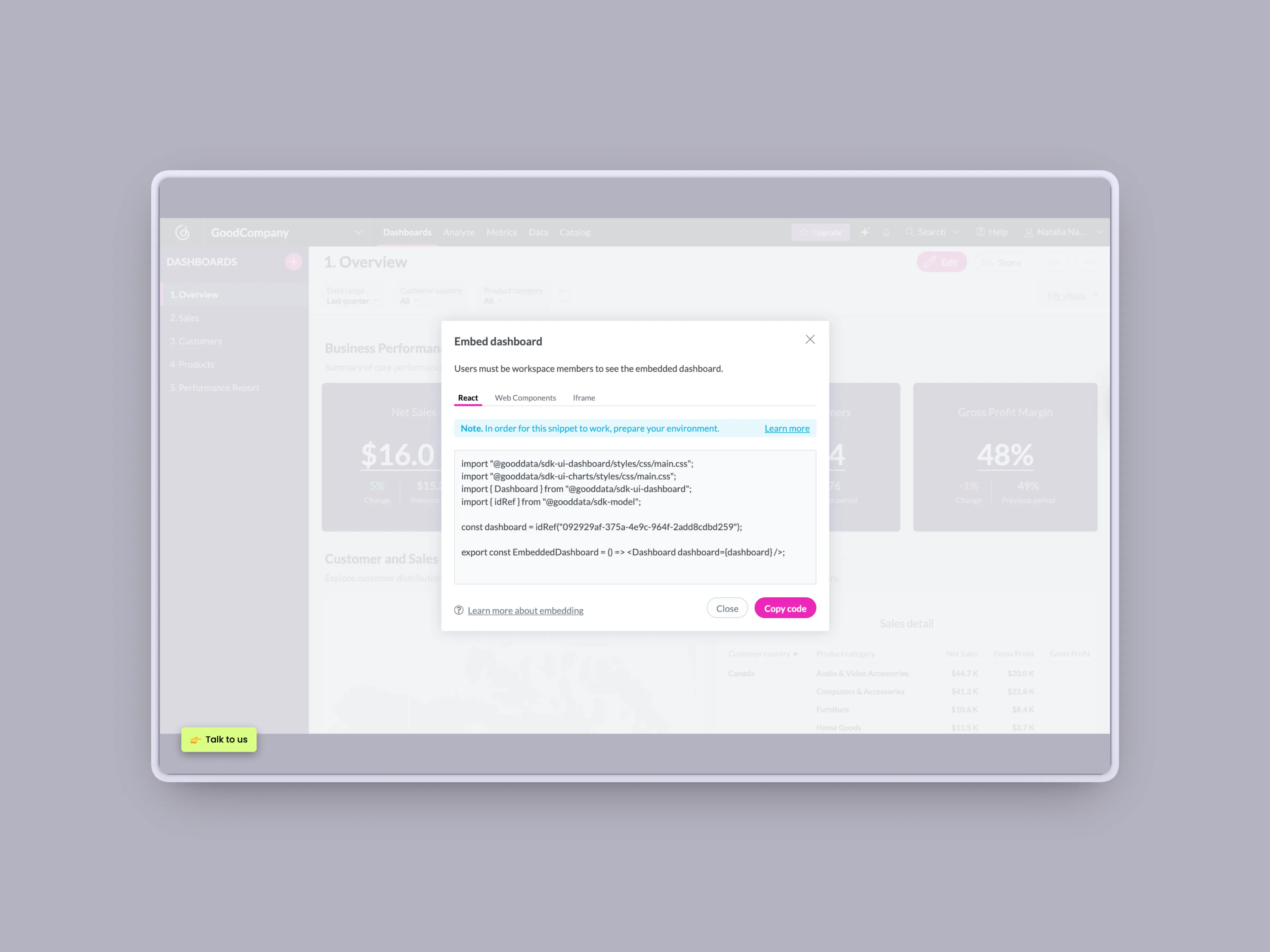
On the product side, the embed experience itself does the convincing: a few lines of code, with React, Web Components, and iFrame options for however the prospect builds.
Tour vs video: relevance beats interactivity
My hypothesis was that an interactive tour would win, show-by-doing usually lowers perceived effort better than a passive video. We A/B tested both. The video won.
It won because the tour included content outside embedded analytics, which made it longer and added irrelevant friction. The video stayed tightly scoped to "how to embed," and the focused asset converted better.
Relevance and scope beat interactivity. A bloated asset loses to a focused one, even a passive one.
Trade-off
Video adapts less to follow-up intent than a tour, so the next iteration is a scoped tour that strips the off-topic content and re-tests.
Speed and search as conversion levers
The hero animation was degrading load on the single most important conversion surface, so I replaced it with a static image. Page speed is a conversion lever, not just polish.
Upstream, I realigned keywords to both traditional search and AEO intent, so the right, higher-intent prospects enter the funnel before any on-page work has to compensate.
Trade-off
SEO and AEO shifts compound slowly and need ongoing maintenance as query behavior changes.
Re-engage with lifecycle
Not every prospect converts on the first visit. A nurture sequence re-surfaced the embedding story and routed back to the demo or trial request, keeping people inside the same narrative.
Lower- and top-of-funnel assets, fact sheets, platform overviews, pricing, gave returning evaluators a reason to come back and convert.